
In the vivid tapestry of the Renaissance, a peculiar and often whimsical thread weaves its way through the art of wood block printing — the grotesque. This chapter delves into the fascinating realm of Renaissance wood block printing, exploring the infusion of grotesque elements that added a touch of whimsy and eccentricity to the printed works of the time.
Amid the serious and often solemn atmosphere of the Renaissance, artists began to incorporate grotesque elements into their wood block prints, offering a departure from the traditional and a glimpse into the whimsical. Grotesque motifs, characterized by fanciful combinations of human, animal, and vegetative forms, emerged as a subversive and playful counterpoint to the more formal aspects of Renaissance art.

The grotesque embellishments were not merely decorative; they became an integral part of the narrative, adding layers of meaning and inviting viewers to explore the -margins of reality. These elements often adorned the tops and tails of printed pages, serving as visual bookends that framed the content within with a touch of irreverence.
As we follow the trail of the Greenman, the connection to the Rose Cross becomes increasingly apparent. The Rose Cross, steeped in mysticism and alchemical wisdom, finds resonance in the Greenman’s embrace of both nature and the fantastical.
The Greenman becomes a guide, a symbolic emissary pointing towards hidden truths embedded in the teachings of the Rose Cross. Its presence in wood block carvings hints at a deliberate effort to convey esoteric knowledge through visual allegory, inviting the adept to decipher the encoded messages.
In the final strokes of interpretation, the Greenman transforms from an enigmatic figure to an illuminator of hidden wisdom. The wood block carving, once a mere curiosity, now becomes a gateway to deeper understanding.
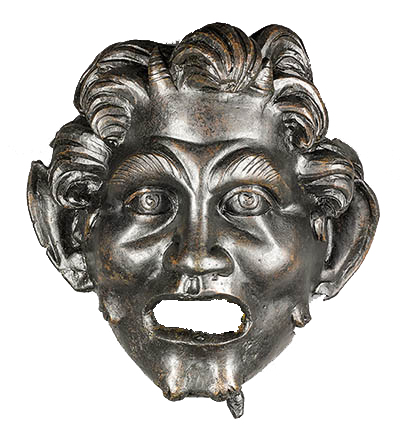
The Green Man, a motif found in various cultures, symbolizes the spirit of the wild and the rejuvenating power of nature. The carving’s resemblance to Pan, particularly in the depiction of horns, raises the possibility that Pan could indeed be the inspiration behind the Greenman imagery. The concept of the Green Man wood block carving as a messenger aligns with the symbolism of the Green Man representing the vital force of nature communicating with humanity.
Daniel Mögling’s translation of Phillip Sydney’s Arcadia into German, plus his prominent depiction of the word Pan on the front page of his Rosicrucian text, the Mirror of Wisdom, further deepens the connection between Rosicrucianism and utopian visions of Arcadia. Mögling’s choice to prominently feature Pan may signify a recognition of Pan’s significance in terms of the Edenic aspects of the Arcadian theme—a reflection of pastoral harmony and the fusion of the natural and divine.
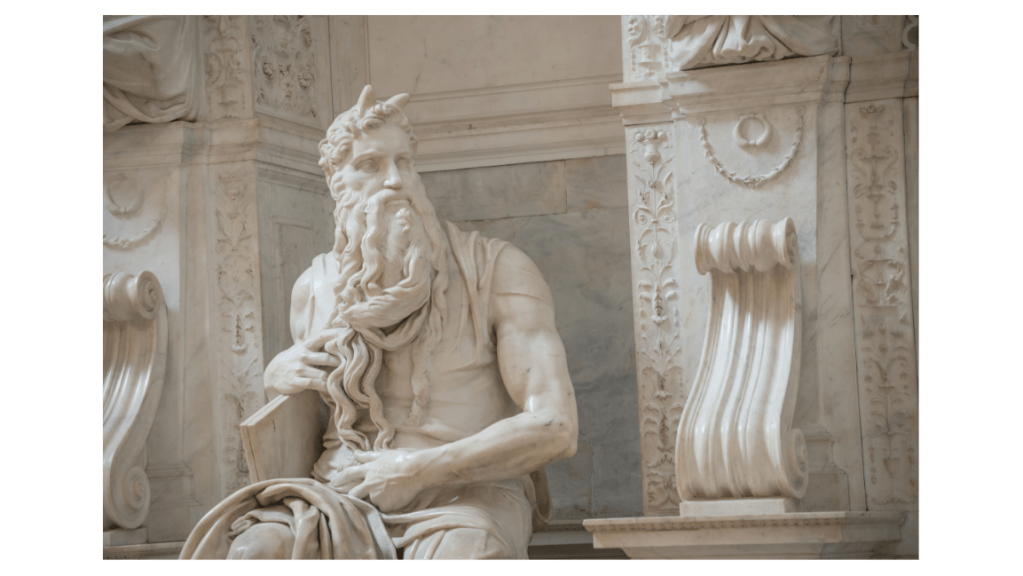
The motif of horns as antennae, connecting individuals to higher powers, extends beyond Pan to figures like Moses in history. The horns on Moses, often depicted in artistic representations, symbolize his direct communication with God, reinforcing the idea that individuals bearing such symbols are conduits between the earthly and divine realms. This symbolism transcends cultural and religious boundaries, emphasizing a universal theme of divine communication.
Also about life force – the ‘green’ in nature and the masculine aspect of Nature in alchemy – embodied in Hermes (or Puck in the Tempest) – nature spirits/elementals.
Also an allusion to Saturn, the wise older man, father time, who was also associated with Pan because of his lasciviousness. Satyrs were thought to be quite sexual creatures because half man, half beast. Moses the wise man with his beard.
Also important to mention that Moses was thought to be the founder of Kabbalah, something he learned from the Egyptian priests (hieroglyphics and the ability to codify symbols in images or sigils) whilst living in the court of the pharaoh, which he later used to create the esoteric bedrock of the Jewish faith as a hidden counterpart to the more exoteric 10 commandments.
Other versions say that he inherited this knowledge from the prophet Enoch while others (Ficino) says that Hermes Trismegistus is the inventor of hieroglyphs, which may be an allusion to his connection to the Egyptian god, Thoth, who was ibis headed.
It is the literal horns of the symbol for Mercury, who is often associated with Pan, or Puck in Shakespeare’s plays – a mischievous trickster and nature spirit. His older, wiser counterpart is Saturn, the bearded sage, also known as the ‘elder Mercury.’ Which is what I think Moses represents. He also carried a staff like the caduceus of Mercury, with its snakes, a symbol of often found in Rosicrucian and hermetic works. This staff is also a magician’s wand, and is often depicted in esoteric art as a tree branch, sprouting leaves, thereby linking it back to Pan and to Hermes Trismegistus, the alchemical Mercury.
Horns are the lunar crescent on head of Mercury – who in alchemy represents the lunar god, Thoth – good wisdom and books.
 Trail of the Green Man