
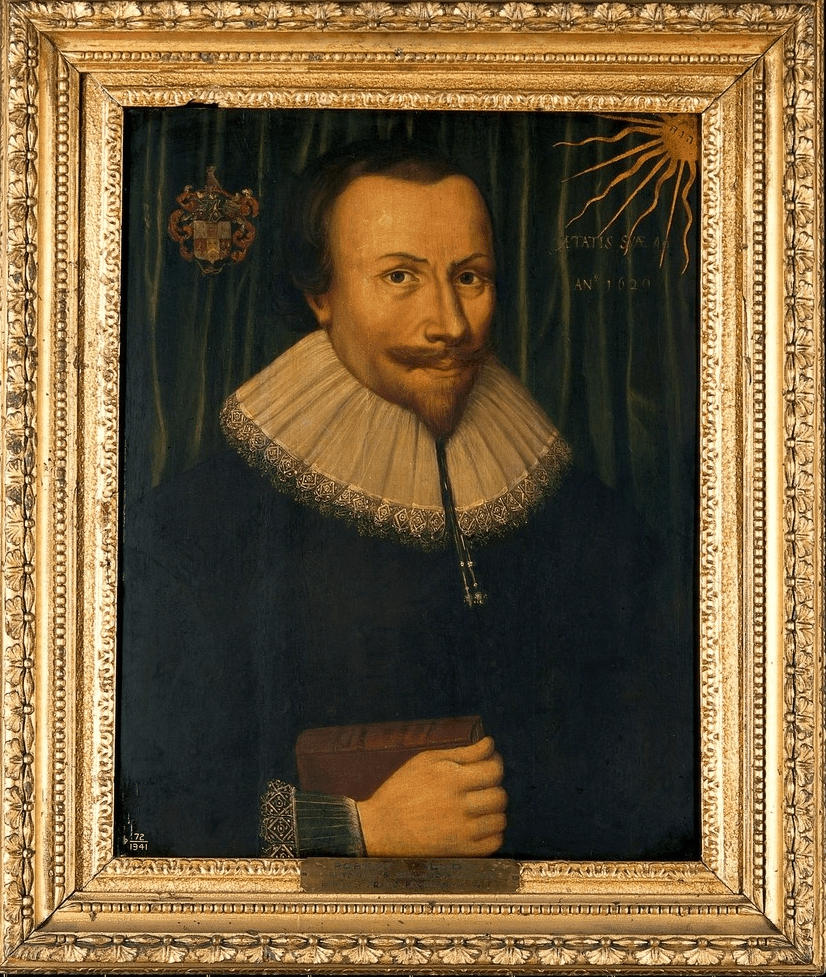
Robert Fludd, also known as Robertus de Fluctibus (1574–1637), was a prominent English Paracelsian physician with both scientific and occult interests. He is also remembered as an astrologer, mathematician, cosmologist, Jewish kabbalist and Rosicrucian apologist.
The son of Sir Thomas Fludd, a high-ranking governmental official (Queen Elizabeth I’s treasurer for war in Europe), and a Member of Parliament, Fludd was born at Milgate House, in Bearsted, Kent.
He studied at St John’s College, Oxford, graduating with a BA in 1597; and an MA, in 1598. He is also known for his celebrated exchange of views with Johannes Kepler concerning the scientific and hermetic approaches to knowledge. And Kepler, of course, is central to Rosicrucian lore because of his involvement in the Great Conjunction and Supernova of 1603/4.
However, Robert Fludd is probably best known for his compilations in occult philosophy, particularly his magnificent cosmological work, the History of the Two Worlds (Utriusque Cosmi… Historia), which was published in two volumes by Theodore de Bry in Oppenheim between 1617 and 1621. This encyclopaedic book delves into Neoplatonic and hermetic cosmology, exploring the realms of the macrocosm (the universe, including the spiritual realm of the Divine) and microcosm (human life on Earth) and their inter-relationship. The frontispiece also contains an image of (micro)cosmic man that strongly echoes Leonardo da Vinci’s Vitruvian Man.
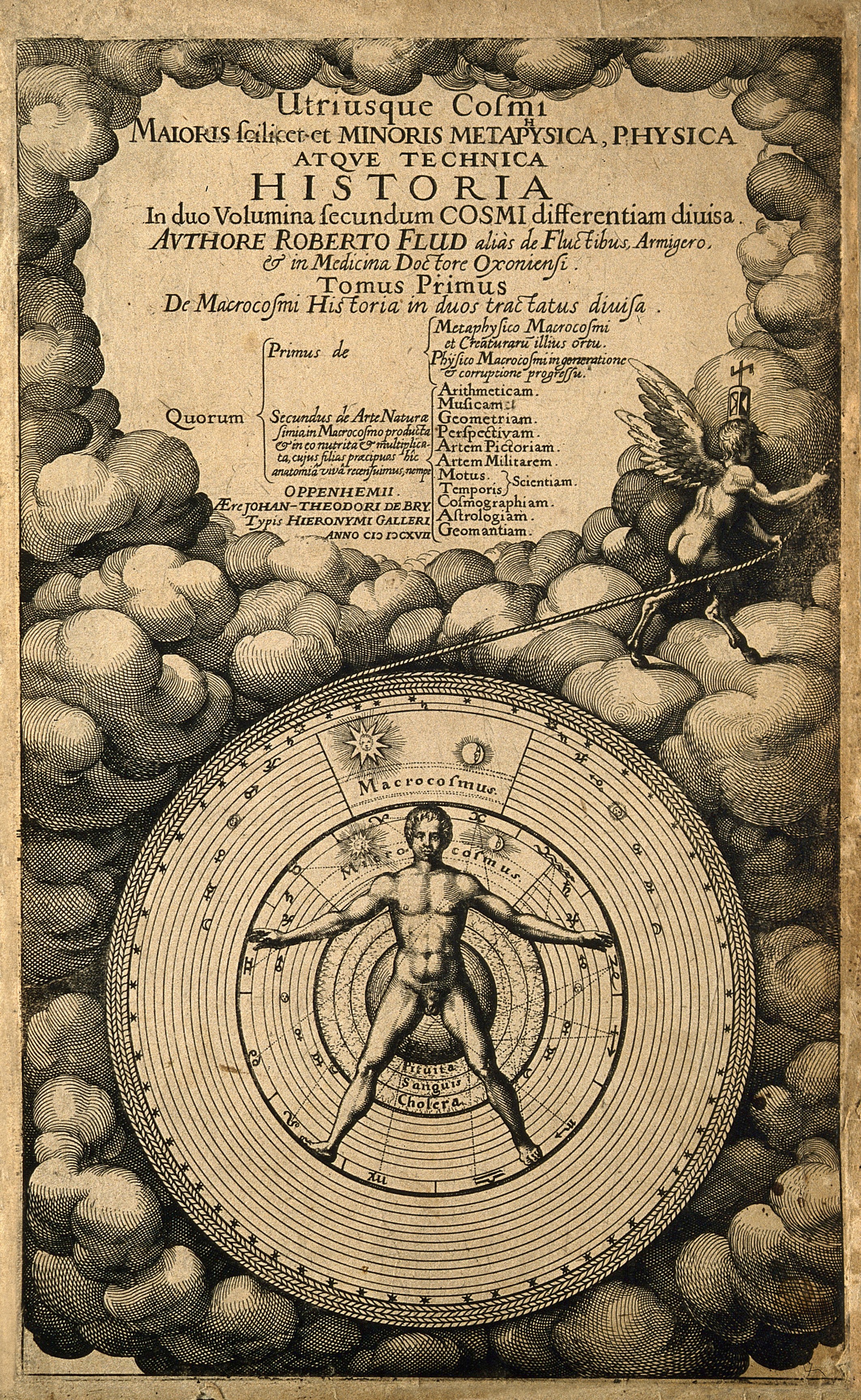
Most of Fludd’s writings represent the culmination of natural philosophy, as distinct from the more scientific materialist tendencies of the 17th century. Deriving his ideas from such diverse sources as the Old Testament, the Jewish Kabbala, alchemy, astrology, sympathetic magic and palmistry, Fludd was primarily interested in establishing parallels between man and the world, both of which he viewed as images of God.
Fludd & Rosicrucianism
A well-known alchemist and Paracelsian physician, Robert Fludd also became a known Rosicrucian apologist, which led many to believe that he was a member of the brotherhood.
Fludd, however, was not a member of the Rosicrucians, as is often alleged, but he did defend their thoughts and ideas, as expressed via numerous manifestos and pamphlets. For example, he produced a quick work, the Apologia Compendiaria (Leiden, 1616), to counter claims by Libavius in 1615 that the Rosicrucians indulged in heresy, diabolical magic and sedition.

Fludd returned to the subject at greater length in Summum Bonum (1629), a 55 page pamphlet. Written under the pseudonym of Joachim Frizius, it defends the claims of the Rosicrucian Fraternity and contains the sympathetic views of Fludd and his friends. Indeed, Tobias Churton has noted that many followers of Paracelsus, including Adam Haslmayr, shared a deep sympathy with the ideas expressed in the Rosicrucian manifestos. The Summum also addresses personal criticisms from the French theologian, Marin Mersenne, who accused Fludd of sorcery and challenged his mystical ideas.
Its title, the Latin phrase Summum Bonum, translates to “the highest good,” and represents a concept that has been explored by various thinkers throughout history, including philosophers like Aristotle and Epicurus. Aristotle considered it to be the ultimate end goal or purpose of human existence, akin to a high state of wellbeing, happiness or fulfilment; while Epicurus associated it with tranquillity and the absence of pain. The pamphlet also explores topics related to true magic, kabbalah and spiritual alchemy, making it a significant contribution to esoteric literature.
The fact is, that although Fludd was not a paid-up member of the brotherhood, like any good hermeticist and Paracelsian, he shared many ideas and values in common with those expressed in the Rosicrucian manifestos, including a leaning towards gnostic forms of Christianity, as well as a desire to reunite faith and reason whilst also setting people free to question the status quo and study material in a holistic manner.
Fludd’s adherence to pansophism resonated with this more joined-up way of viewing knowledge and the cosmos, often referred to natural philosophy, as well as Neoplatonic concepts such as universal sympathy that was being revived by the Platonic Academy on Florence by key Renaissance figures like Marsilio Ficino.
 Trail of the Green Man